The Best Time to Visit Vatnshellir Lava Cave
The best time to visit Vatnshellir lava cave is September, and the reason has nothing to do with the cave. Underground it sits at 4 to 6°C in every month of the year, so the tour you get in January is the tour you get in July. What the calendar changes is the journey: daylight runs from about 3.7 hours at the winter solstice to 21.7 in June, wind averages half again as strong in January as in July, and departures drop from roughly hourly in summer to two or three a day in winter. What is running on your dates is on the current timetable.
Quick answer
September is the best month: long enough days, mild road conditions, summer's hourly departures still running, and none of the summer queue. July and August are the safest bet on weather but the busiest and the hardest to book on the day. Winter works and the cave is unchanged, but you are trading daylight and road certainty for an empty car park.
Key takeaways
- The cave never changes temperature; the season changes the drive, not the tour
- Roughly hourly departures between 10:00 and 18:00 in summer, two or three a day in autumn and winter
- Mean air temperature at the cave: -1.0°C in December, 10.1°C in August
- Daylight: about 3.7 hours at the winter solstice, 21.7 at the summer one
- Wind averages near 30 km/h in January against near 20 km/h in July
- Rain is spread through the whole year, 135 to 205 mm a month
Seasons at a Glance
The whole year in one table
Temperature, rain and wind below are five-year means measured at the cave's own coordinates rather than at Reykjavík, which sits in a milder, more sheltered spot two hours away.
| Season | Mean air temp | Rain per month | Mean daily max wind | Departures | Verdict |
|---|---|---|---|---|---|
| June to August | 7.9 to 10.1°C | 145 to 201 mm | 20 to 21 km/h | Roughly hourly, 10:00 to 18:00 | Safest weather, worst crowds |
| September to October | 4.0 to 7.0°C | 136 to 205 mm | 23 to 25 km/h | Thinning from hourly | Best overall |
| November to March | -1.0 to -0.4°C | 135 to 175 mm | 27 to 30 km/h | Two or three a day | Empty, atmospheric, road-dependent |
| April to May | 2.4 to 5.2°C | 159 to 172 mm | 22 to 23 km/h | Building back up | Quiet shoulder, long light returning |
Reading it
The pattern is not the one people expect. Rain barely varies: every month here gets between 135 and 205 mm, and September is the wettest of the year rather than any winter month. What actually swings is wind, and wind is what closes the road and makes the ten minutes at the hatch unpleasant.
So the shoulder months win on the metric that matters. September has autumn's light with summer's departure frequency and none of July's queue.
Summer, June to August: Safest Weather, Worst Queue
What you get
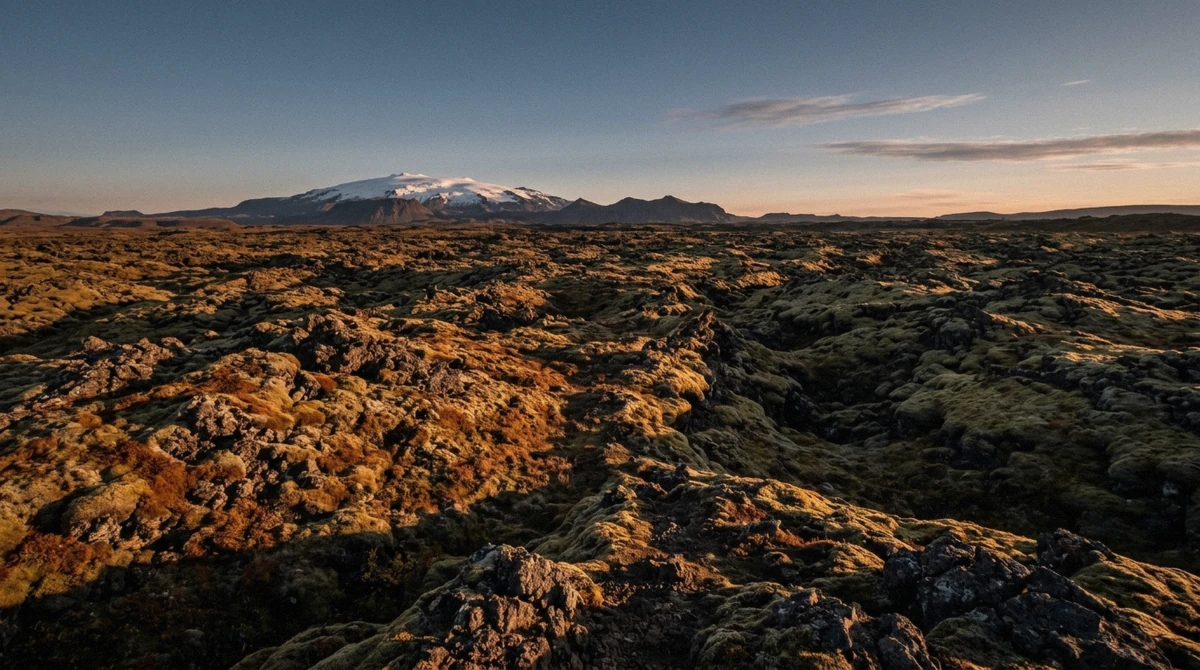
Mean air temperature at the cave reaches 10.0°C in July and 10.1°C in August, the calmest wind of the year at 20 to 21 km/h, and daylight that stops being a constraint at all. Around the summer solstice this latitude gets about 21.7 hours of it, which means a 21:00 departure is still a daylight drive home.
Departures run roughly hourly between 10:00 and 18:00. That is four times what winter offers and it is the practical argument for coming now.
- Warmest and calmest month of the year above ground
- Most departures, so the most chance of a slot that fits your day
- Route 574 reliably open
- August is the wettest of the three at about 201 mm
The cost
Group size is capped by the width of the staircase, and in July and August departures fill by mid-morning. Turning up at the car park at 14:00 in August without a booking is how people end up driving four hours for nothing.
The car park holds about fifteen cars and it overflows. And the peninsula is at its busiest, so Djúpalónssandur and Lóndrangar, which are the reason to be on this road at all, come with coaches. If you are here in high summer, take the first departure of the day and see everything else before ten.
Autumn, September to October: The Best Window
Why September wins
Mid-September still gives about 13.1 hours of daylight, which is more than enough for a Reykjavík day trip with three stops on it. Mean temperature is 7.0°C, wind is up only slightly at 25 km/h, and the summer departure pattern has not yet collapsed.
What has collapsed is the queue. The coaches thin out after the third week of August and the car park stops being a problem. On a mid-September weekday I have had a four-person group, which changes the tour: you can ask questions, you can stop where you want, and you can get the photograph of the staircase from below that a full group makes impossible.
- About 13.1 hours of daylight in mid-September, 9.7 by mid-October
- 7.0°C mean in September, 4.0°C in October
- The wettest stretch of the year at about 205 mm in September
- Small groups, and the tour is better for it
October's trade
By mid-October you are down to 9.7 hours of daylight, which still comfortably covers a day trip but starts to force choices about how many stops you make. Departures begin thinning towards the winter pattern. The upside is that the moss on the lava field goes from green to rust, and the cave entrance photographs better in October than in any other month.
Winter, November to March: Empty and Road-Dependent
The cave does not notice
This is the point everyone misses. Vatnshellir has no closed season. The temperature 35 metres down is the same in February as in July, there is no ice to form or melt, and nothing about the route changes. Compare that with Iceland's glacier ice caves, which are a winter-only product because they melt, or Þríhnúkagígur, which only operates from roughly May to October.
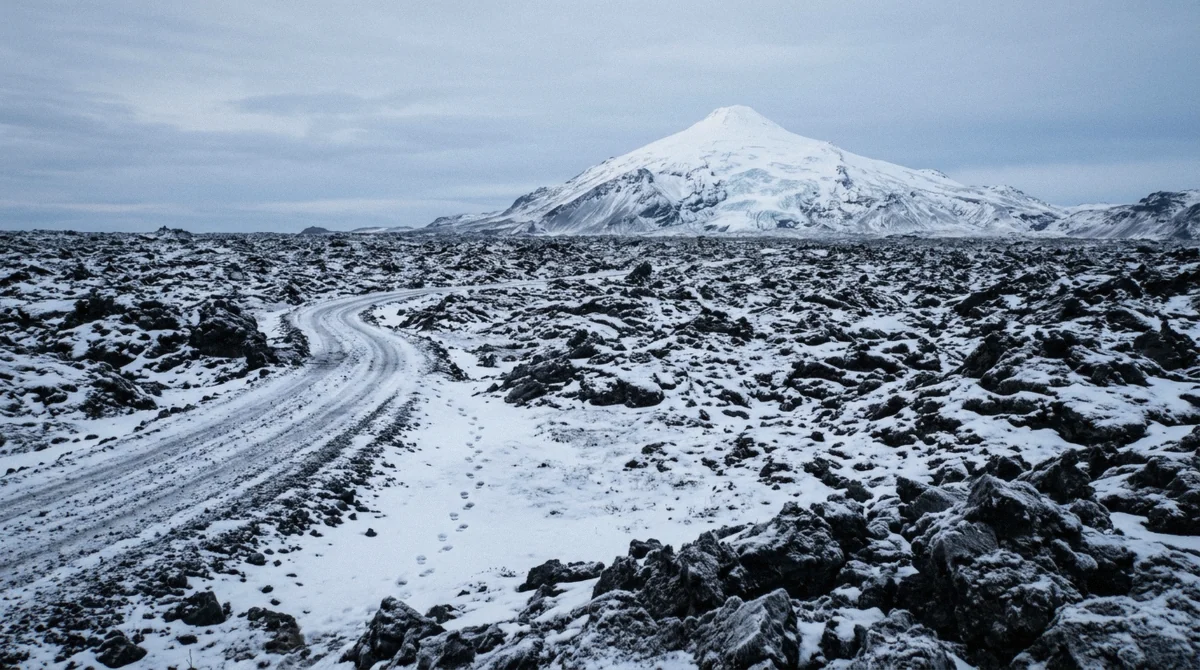
What changes is everything above the hatch. Mean air temperature at the cave sits at -1.0°C in December and -0.9°C in January. Wind averages 27 to 30 km/h. And daylight drops hard: about 6.3 hours in mid-November, 5.2 in mid-January, and about 3.7 around the solstice.
- Two or three departures a day, so your date is chosen for you
- About 3.7 hours of daylight at the solstice: the drive out and back is in the dark
- -1°C mean and 30 km/h wind on an exposed lava field
- Empty. On some winter departures the group is four people
Making a winter visit work
Take the first departure of the day, because it is the only one with light on both sides of it. A 45-minute tour fits inside a December daylight window with room for one other stop, and Lóndrangar is five minutes away.
The northern-lights argument is real but do not overweight it: you are on the peninsula for the cave and the coast, and the aurora is a bonus you cannot book. What you can book is a departure you are able to cancel free up to 24 hours before, which is the only sensible way to handle an Icelandic winter forecast.
Spring, April to May: The Shoulder Nobody Books
Underrated
April sits at 2.4°C mean and May at 5.2°C, with wind back down to 22 to 23 km/h and the daylight climbing fast. By mid-May this latitude has about 18.6 hours of it, which is effectively unlimited for a day trip.
Departures build back towards the summer pattern through May. Crowds do not arrive until late June. If September is taken, this is the next best window, and May in particular gives you summer's light and autumn's emptiness.
The one thing spring does not give you is settled weather. April can hand you sleet on Route 574 with no notice.
What Actually Affects Your Visit
Month by month, in brief
Daylight is measured at the cave's own latitude; temperature and wind are five-year means at its coordinates.
| Month | Daylight | Mean temp | Mean daily max wind | One-line call |
|---|---|---|---|---|
| January | About 5.2 h | -0.9°C | 30 km/h | Windiest month; first departure only |
| February | About 8.6 h | -0.5°C | 29 km/h | Empty cave, watch the road |
| March | About 11.7 h | -0.4°C | 27 km/h | Light returns, crowds do not |
| April | Long and growing | 2.4°C | 23 km/h | Sleet possible without warning |
| May | About 18.6 h | 5.2°C | 22 km/h | Best of the shoulder |
| June | About 21.7 h | 7.9°C | 21 km/h | Daylight stops being a constraint |
| July | Very long | 10.0°C | 20 km/h | Calmest and busiest |
| August | Long | 10.1°C | 20 km/h | Warmest and wettest of the three |
| September | About 13.1 h | 7.0°C | 25 km/h | Best overall month |
| October | About 9.7 h | 4.0°C | 23 km/h | Rust-coloured moss, small groups |
| November | About 6.3 h | 2.2°C | 27 km/h | Short days, two or three departures |
| December | About 3.7 h | -1.0°C | 27 km/h | Driest month, least light |
Three variables, none of them the cave
This is the counterintuitive part, and it is worth stating plainly because most seasonal guides get it backwards.
First: the cave is a constant. Nothing about the underground experience varies by month.
Second: wind, not snow, is what stops you. Route 574 is paved the whole way around the tip of the peninsula, and it crosses open lava with nothing to break a westerly. Vegagerðin restricts or closes it on wind far more often than on snow, and it publishes live status at road.is. Check it the morning you drive, not the week before.
Third: daylight decides how much of the peninsula you see, not whether you see the cave. The tour is 45 minutes and the car park is lit by your headlights if it comes to that. What you lose in December is Lóndrangar, Djúpalónssandur and the coast, which is most of the reason to drive out here. Everything within 25 minutes of the car park is what the daylight budget is actually for.
Rain is not the variable you think
Every month here gets between 135 mm and 205 mm. September is the wettest of the twelve and December the driest, which is the opposite of what most visitors assume. Rain does not affect a cave tour at all, and it barely affects the drive.
Plan around wind and light instead.
Best Time of Day
First departure, in every season
In summer, the first departure of the day is the one with space, the smallest group and an empty car park, and it leaves the rest of a long day for the coast.
In winter, the first departure is the only one that guarantees you daylight for the drive at both ends.
The cave itself does not care what time it is, which is one of the few genuine advantages of an activity with no sky in it. If you only have one slot available, take it; there is no bad hour down there.
What If the Weather Turns
The cave stays open; the road might not
Rain, sleet and cold do not cancel this tour. What cancels it is Route 574 closing, or you deciding not to drive a wind-battered road across open lava, which is a legitimate call.
Cancelling is free up to 24 hours before departure and nothing is charged when you reserve, so the winter pattern that works is to book two or three days out once a forecast exists rather than three weeks out on hope. If the road shuts on the morning, your guide is not getting there either.
Which Month, by What You Want
If you want the best all-round visit
come in September. Long light, hourly departures, small groups, and the moss still green.
If you are on a fixed summer holiday
take the first departure of the day and book it in advance. Mid-morning is when August sells out.
If you want the cave to yourself
come between November and March and expect a group of four. Check road.is on the morning.
If you have one winter day and short light
first departure, then Lóndrangar five minutes away. That is a complete December afternoon.
If you are chasing ice formations
no month works: this is a dry lava tube. Iceland's caves compared points you at the ones with ice.
When to Visit Vatnshellir: Common Questions
Is Vatnshellir cave open in winter?
Yes. Tours run year-round, dropping from roughly hourly in summer to two or three departures a day in autumn and winter. The cave is the same temperature in February as in July, so nothing about the tour itself changes.
What is the best month to visit?
September. You still get about 13 hours of daylight and close to the summer departure pattern, but the coaches have gone. May is the next best window for the same reasons in reverse.
How cold is it inside?
A few degrees above freezing in every month. The rock does not follow the surface. What to wear is the same list in July as in January.
Is the Vatnshellir lava cave tour worth it in bad weather?
Rain makes no difference to a cave, so bad weather is arguably the best reason to book one: it is the one thing on the peninsula that a wet day cannot spoil. The exception is wind, which can close Route 574 entirely.
How far in advance should I book?
In July and August, as far ahead as your plans allow, because departures fill by mid-morning. In winter, two or three days out once you can see a forecast, since cancelling is free up to 24 hours before.
How much daylight is there in winter?
About 5.2 hours in mid-January and about 3.7 around the solstice. That is enough for the 45-minute tour and one other stop if you take the first departure, and not enough for a full peninsula loop.
Does the road close?
Occasionally, and wind is usually the reason rather than snow. Route 574 is paved but crosses open lava with nothing to break a westerly. Check road.is on the morning; the drive is covered in full here.
Are there fewer departures in winter?
Yes, two or three a day against roughly hourly in summer. It means your date effectively chooses your time, so book rather than turn up.
Pick your month for the drive and the daylight, because the cave has already made its decision and it never changes. September gets you the most of everything that does vary. February gets you a cave to yourself and a road you have to watch.
Both are good visits; only one of them needs road.is open in a browser tab.