Vatnshellir Lava Cave: A Journey to the Center of the Earth
The route from the hatch down both staircases to the lowest chamber, filmed in one go.
Video: Hike and SightsTwo spiral staircases drop through the roof of a tube that drained 8,000 years ago, into rock that has stayed a few degrees above freezing ever since. The Vatnshellir lava cave tour walks it in 45 minutes with a helmet and a torch, and you can cancel free up to a day before.
Updated July 2026
Quick answer
Vatnshellir is a 200-metre lava tube on the Snæfellsnes peninsula, formed by an eruption about 8,000 years ago and open only on a guided tour. The walk lasts 45 minutes, drops 35 metres below the surface down two spiral staircases, and costs $46 per person booked online, with a helmet and a torch handed to you at the car park.
Key takeaways
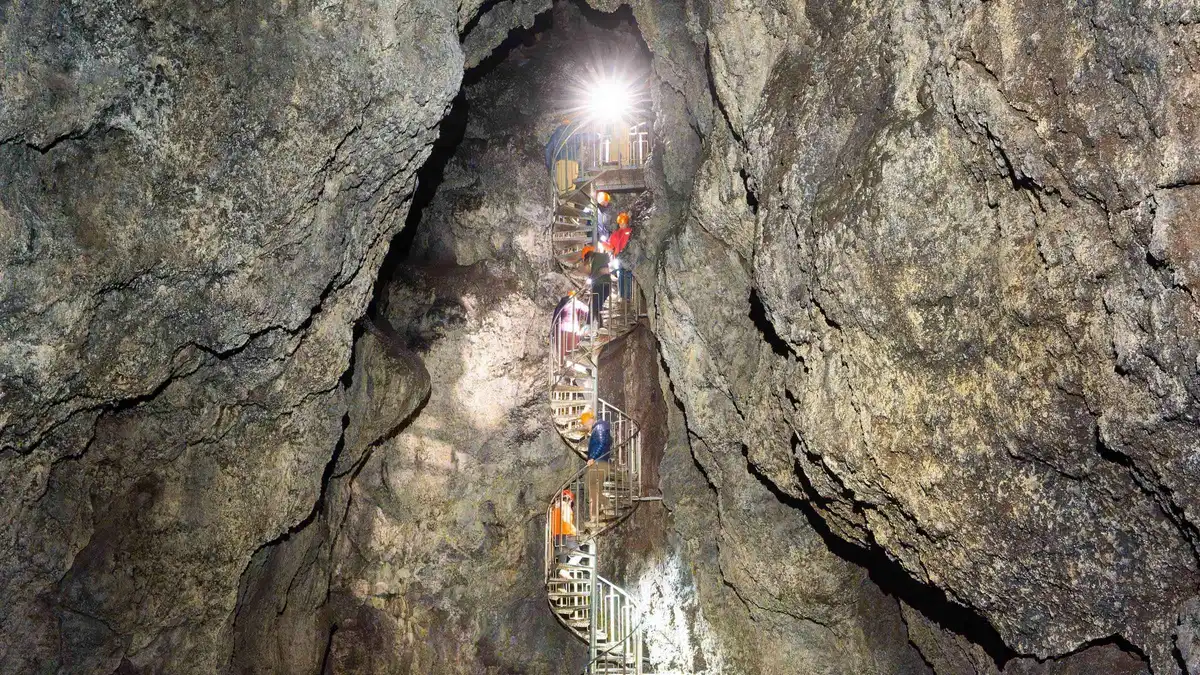 Only way in
 The Guided Descent into Vatnshellir
A guide hands out a helmet and a torch at the car park, then takes you down two spiral staircases into an 8,000-year-old lava tube, 35 metres under the Snæfellsnes lava field. Three chambers, iron-red and sulphur-yellow walls, and a minute of total darkness at the bottom. Free cancellation up to 24 hours before, and nothing to pay today.
Price, departure times and inclusions were checked on 29 July 2026 and are confirmed at checkout on GetYourGuide, which handles the booking, the payment and support. Summit Adventure Guides runs the tour and sets the timetable; departures thin out in winter and in bad weather on Route 574.
Departure times change with the season and small groups fill fast in July and August. Pick your date to see the live start times and the final price in your own currency.
Four volcanic caves take visitors underground in Iceland, and they are not variations of the same trip. Age, length and how you get in separate them, and the answer to which one to pick usually comes down to where you already are on the map.
| Cave | Age | Length | Book | How you get in | Best for |
|---|---|---|---|---|---|
| Vatnshellir | 8,000 years | 200 metres | Check | Two spiral staircases, 35 metres down | A Snæfellsnes driving day |
| Raufarhólshellir | 5,200 years | 1,360 metres | Walk in, then a lit footbridge | A short hop from Reykjavík | |
| Víðgelmir | About 1,100 years | 1,585 metres | Stairs into a collapsed section | The largest volume underground | |
| Þríhnúkagígur | About 4,000 years | Not a tube | Lowered 120 metres by open lift | One-off scale, May to October only |
Þríhnúkagígur is a drained magma chamber rather than a lava tube, which is why it needs a lift instead of a staircase. Raufarhólshellir came from the Leitahraun eruption east of Reykjavík; Víðgelmir came out of Hallmundarhraun around 900 AD.
The cave sits 136 km from Reykjavík, a two-hour drive if the weather leaves you alone. You take Route 1 north out of the city, cross under Hvalfjörður in the tunnel, then turn west onto Route 54 at Borgarnes and follow it the length of the Snæfellsnes peninsula. At the western tip Route 54 becomes Route 574, the loop around Snæfellsjökull, and the cave car park is signposted off it.
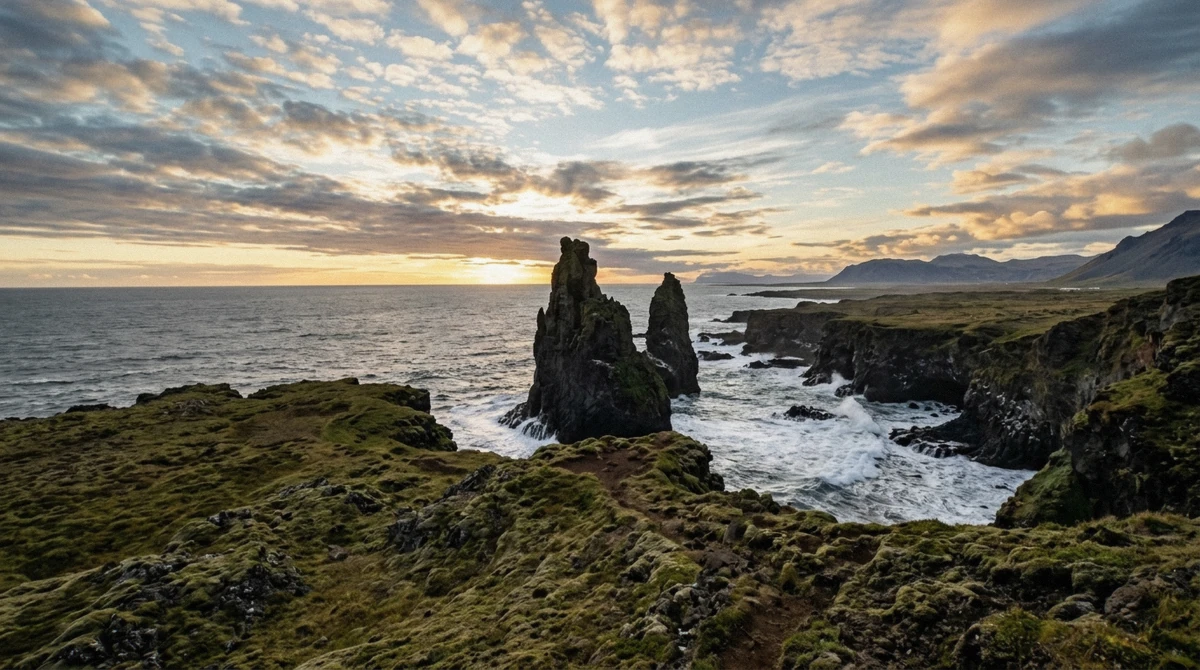
Nobody drives to Vatnshellir and nothing else. The turn-off sits between the Lóndrangar basalt pillars and the black pebble beach at Djúpalónssandur, ten minutes west of Arnarstapi and about 25 minutes south of Hellissandur, which puts it in the middle of a full peninsula day rather than at the end of one.
| Leg | Road | Distance | Drive time |
|---|---|---|---|
| Reykjavík to Borgarnes | Route 1 | 74 km | About 1 hour |
| Borgarnes to Arnarstapi | Route 54 | 95 km | About 1 hour 20 |
| Arnarstapi to the cave | Route 574 | 12 km | About 10 minutes |
| Hellissandur to the cave | Route 574 | 22 km | About 25 minutes |
There is no visitor centre and no ticket office. The entrance is a small metal structure over a hole in the lava field, a few minutes' walk from a gravel car park, and your guide arrives with the helmets in the back of a vehicle. Arrive 10 minutes before the time printed on your ticket, because the group goes down together and the hatch is locked behind you.
There are no toilets at the cave. The nearest are at the Malarrif visitor centre, about three minutes further along Route 574, and that is also where the national park rangers sit if you have questions about the rest of the peninsula.
The lava field around the hatch is covered in woolly fringe moss, and a footprint in it stays visible for decades. Walking off the marked path is prohibited inside Snæfellsjökull National Park, and the rangers do enforce it. Keep to the gravel between the car park and the dome, which is all of ninety seconds anyway.
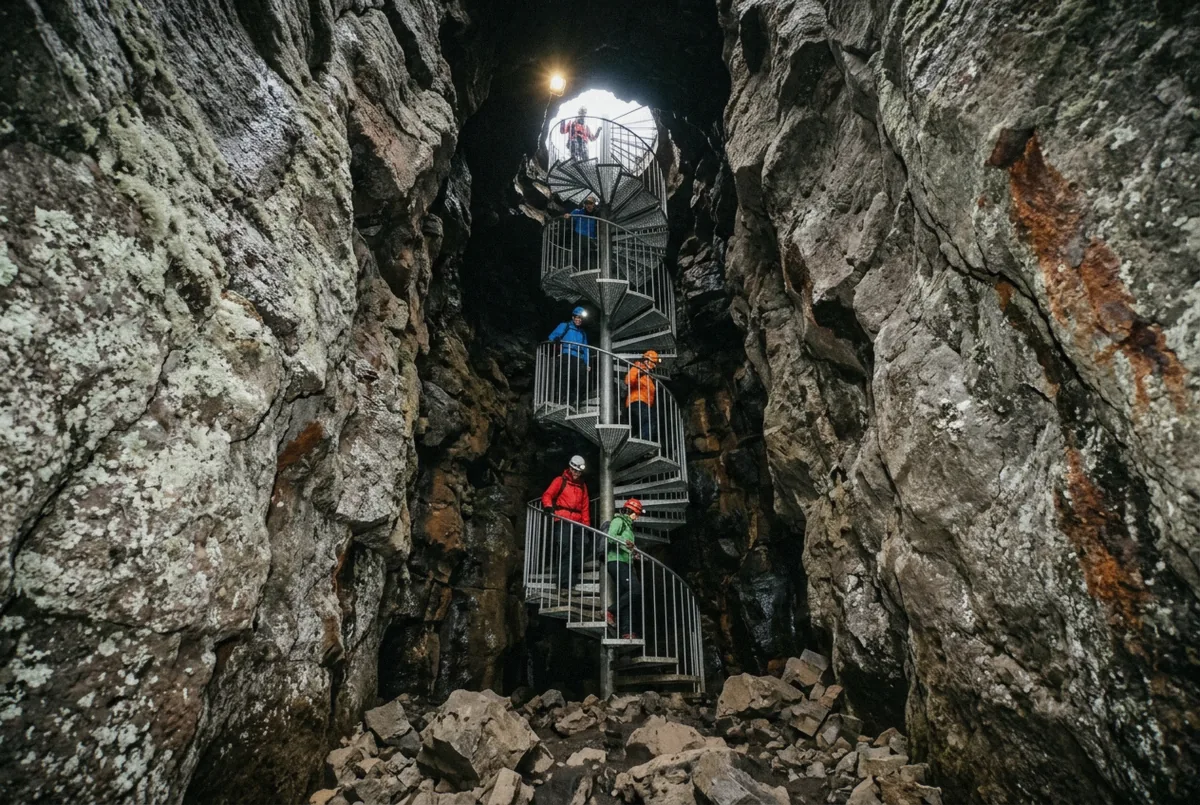
Your guide unlocks the hatch and hands out a helmet and a torch. The first spiral staircase takes you through the roof of the tube into the upper section, and the second drops you from there into the lower chambers. Both are steel, both turn tightly around a central post, and climbing them unaided is the real requirement of this tour. The walking is short. The stairs are what people underestimate.
Below the second staircase the route runs through three chambers to the deepest point, 35 metres under the surface. The tube is about 200 metres long in total, which means you cover the ground slowly and stop often rather than march.
The colours on the walls are minerals left behind as the tube cooled. Iron reads as rust red, sulphur as pale yellow, copper as green, and the guide will put a torch beam on each so you can see the difference. Along the upper section the lava froze into shapes as it drained, which is where the cave gets the lava statues the operator talks about.
At the deepest point the guide asks everyone to switch their torches off. In total darkness the cave is silent enough that people start to hear their own pulse, and it is the part of the tour that shows up most often in reviews.
The temperature underground sits a few degrees above freezing all year, somewhere around 4 to 6°C, and it does not change in July. The lighting is limited and the air is damp. A fleece and a windproof layer are enough, gloves matter more than people expect because you hold a cold steel handrail for two staircases, and your shoes need a grip.
Summit Adventure Guides refuses high heels, flat-soled shoes and flip-flops at the entrance, and that is not a formality: the floor was never levelled. Hiking boots are ideal, trainers with tread are accepted.
| Item | Bring it? | Why |
|---|---|---|
| Warm mid-layer | Yes | 4 to 6°C year-round, damp air |
| Gloves | Yes | Two cold steel handrails |
| Hiking boots or trainers with tread | Yes | Unlevelled lava floor |
| Windproof outer layer | Yes | The wait is outdoors on an exposed lava field |
| Helmet and torch | No | Both included with your ticket |
| Your own headlamp | No | Not permitted inside the cave |
| Flip-flops, heels, flat soles | No | Refused at the entrance |
Vatnshellir is short and deep rather than long and level. This is what sits between the car park and the bottom.
A metal structure over the shaft in the lava field. The guide unlocks it, hands out helmets and torches, and locks it behind the group.
Steel, tight, through the roof of the tube. This is where anyone unsure about stairs finds out.
Lava statues frozen into the walls where the flow drained away, and the first of the mineral colours.
The drop between levels. Gloves earn their place here, on cold steel in the dark.
Three chambers in total on the route, the last at 35 metres. This is where the torches go off and the cave goes silent.
The tube runs about 200 metres in total. The distance is modest; the vertical is what makes the tour physical.
The lava that built Vatnshellir came out of the Purkhólar crater row on the lower slopes of Snæfellsjökull. Molten rock ran downhill in a river, the surface of that river cooled and hardened into a roof, and the lava underneath kept flowing beneath it. When the eruption stopped, the last of the melt drained downhill and left the roofed channel standing empty. That empty channel is the cave.
The date puts Vatnshellir in a different class from Iceland's other visitable caves. It drained roughly 8,000 years ago, which makes it around 3,000 years older than Raufarhólshellir and some seven thousand years older than Víðgelmir, formed in the Hallmundarhraun eruption around 900 AD. Older rock means more time for water to carry iron, sulphur and copper into the walls, which is why the colours here are stronger than the age of the lava would suggest.
Vatnshellir translates from Icelandic as water cave, which puzzles most visitors, because the floor is dry. The name comes from the farm and the water source it sat near rather than anything inside, and the tube itself never carried a river. Rain does find its way through the rock in places, so expect a few damp patches on the lower level.
The cave was known for a long time before anyone could walk into it. Cavers went down on ropes; everyone else stayed on the surface. The staircases and the hatch went in and the cave opened to the public with guided tours in summer 2011, and Summit Adventure Guides has held the licence since.
The mountain above has a longer literary record than the cave below. Jules Verne sent his characters down through Snæfellsjökull in Journey to the Center of the Earth in 1864, and the operator leans on the line hard enough that the tour is often sold as the first steps of that descent. Verne never came to Iceland.
The cave takes 45 minutes. Everything below is within a 25-minute drive of the same car park, which is why most people build a full day around it.
Three visitor films, chosen because they show different things: the full route end to end, what the staircase feels like if you dislike enclosed spaces, and a short local edit of the chambers.
The route from the hatch down both staircases to the lowest chamber, filmed in one go.
Video: Hike and SightsA visitor who does not like tight spaces talking through the descent while making it. Worth watching if the staircases worry you.
Video: Worrywart AdventuresA short edit of the chambers and the mineral colours on the walls.
Video: Hello IcelandVideos load only after you press play. Third-party footage can change or disappear without notice.
Great tour, a fun experience while on the Snæfellsnes peninsula.
Maia was a really knowledgeable guide. She explained things clearly and at a good pace, and her calm delivery made it very engaging. We enjoyed seeing the caves and she answered all our questions.
Fun and educational. A challenge to venture 30 m beneath the earth's surface.
Different to other caves. Still a mystery how the cave was formed. Many interesting details about volcanic activity in Iceland.
This tour was very informative, as well as an incredible view into the inner workings of a dormant lava tube. Our guide was very knowledgeable and made us all feel welcome.
Fantastic tour. Thor was a great guide, very knowledgeable, and it was a great experience. Only 4 of us during the trip, so it was easy to move around and see everything in the cave.
Verified reviews from the GetYourGuide listing, quoted as written and corrected for spelling only. The tour holds 4.7 out of 5 from 261 reviews.
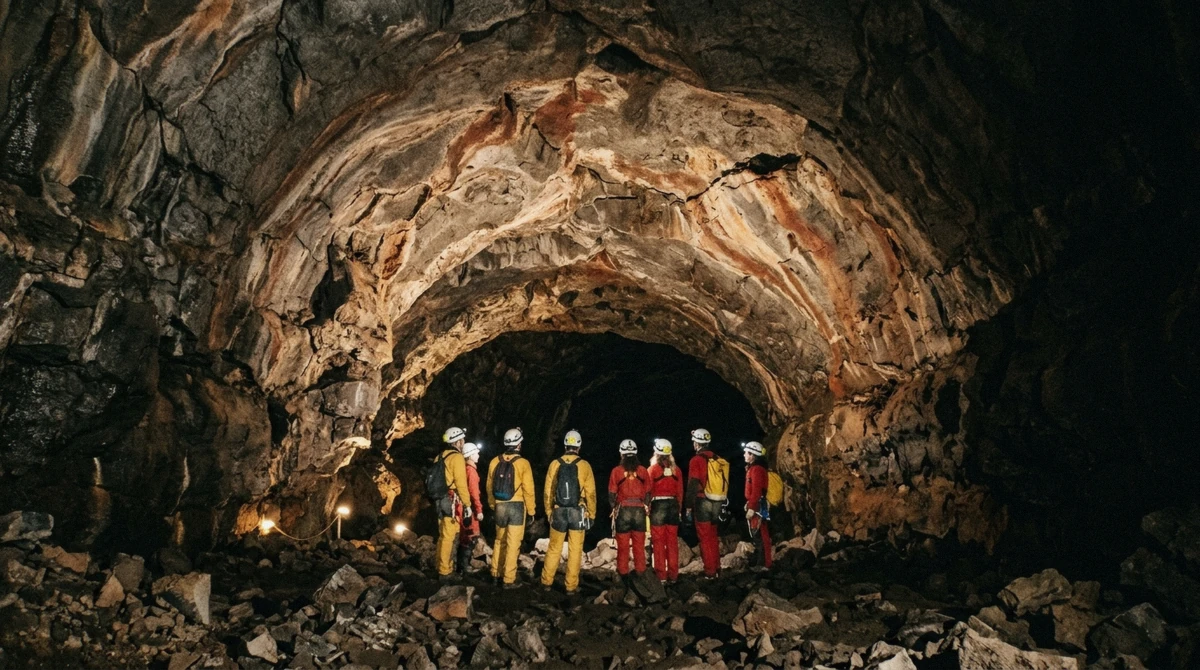
The eruption that built this tube ran about 8,000 years ago, out of the Purkhólar crater row below Snæfellsjökull. Every other lava cave open to visitors in Iceland is thousands of years younger, and Víðgelmir is younger by seven millennia.
Glacier ice caves close in spring and the Þríhnúkagígur lift only runs from May to October. Vatnshellir runs year-round, on a shorter winter timetable, which makes it the volcanic trip that survives a February itinerary.
The tour is short by design and slots into a Snæfellsnes drive without eating it. You park, walk two minutes, go down, come up, and carry on to Djúpalónssandur.
Summit Adventure Guides is the only operator licensed inside the cave, run by a family from the peninsula. Reviewers name their guides, which is usually the sign of a small operation rather than a rota.
Vatnshellir sits inside Snæfellsjökull National Park, which is why access has been guided-only from the start and why the rules about staying on the marked path are enforced. The fragile detail that survives underground survives because of the locked hatch.
The operator charges 5,900 ISK at the gate, about $47. Online it is $46 with free cancellation up to 24 hours before and nothing to pay when you reserve. Booking ahead costs you nothing and removes the risk of a full departure.
Yes, if you understand what it is. You are paying $46 for 45 minutes inside an 8,000-year-old lava tube with a guide who explains how it drained, not for a long underground hike. The recurring criticism in recent reviews is that travellers had not grasped how small the cave is or how little of it you walk, which is a briefing failure rather than a fault in the tour. If you want distance underground, Raufarhólshellir near Reykjavík gives you 1,360 metres instead of 200. Our honest read on the trade-off is in the case for and against going down.
45 minutes from the moment the guide unlocks the hatch. Add ten minutes before departure for the briefing and helmets, and a couple of minutes each way for the walk between the car park and the dome, so budget an hour at the site. What you will actually spend that time doing is broken down in our walk-through of the descent.
On Route 574 near the western tip of the Snæfellsnes peninsula, inside Snæfellsjökull National Park, between the Lóndrangar pillars and Djúpalónssandur beach. It is 136 km from Reykjavík, about a two-hour drive, and ten minutes west of Arnarstapi. Full directions and the road conditions to expect are in the drive from Reykjavík.
It depends on what you want underground. Vatnshellir is the oldest at 8,000 years and the only one inside a national park; Raufarhólshellir is the longest walk at 1,360 metres and the closest to Reykjavík; Víðgelmir has the greatest volume at 1,585 metres. We compare all four side by side, including Þríhnúkagígur, in Iceland's lava caves ranked.
A few degrees above freezing all year, around 4 to 6°C, whether you visit in January or July. The lighting is limited and the air is damp, so a fleece, a windproof layer and gloves cover it. What to wear for the cave has the full list, including the footwear the operator turns away.
Children aged 5 and over can join, and at the gate children aged 5 to 11 go free. Under 5 is refused, because the two spiral staircases and the uneven floor cannot be made safe for a small child who needs carrying. Teenagers aged 12 to 17 pay 2,600 ISK. What the descent is actually like with children is covered in taking kids down.
In summer, yes. Groups are capped by the width of the staircase and departures in July and August fill by mid-morning. In winter there are only two or three tours a day, so an unbooked arrival is a gamble either way. Reserve your date on the availability calendar and cancel free up to 24 hours before if the weather turns.
Yes. Tours run year-round, roughly hourly between 10:00 and 18:00 in summer and dropping to two or three departures a day in autumn and winter. The cave itself does not change with the season; the road to it does. Which month to pick goes through the trade-offs.
Anyone who cannot climb two flights of spiral stairs unaided, anyone who needs a level surface underfoot, and anyone who finds enclosed dimly lit spaces genuinely distressing. The cave is not narrow, but it is dark and the only way out is back up the way you came. Our safety and access page sets out what the guides can and cannot accommodate.
Plenty, and all of it within 25 minutes on the same road: Lóndrangar, Djúpalónssandur, the Malarrif lighthouse, Arnarstapi and the coastal path to Hellnar. What to see around the cave sets out a full day on Route 574.
Planning guides
Eight guides covering the drive, the descent, the clothing and the choice between Iceland's caves.